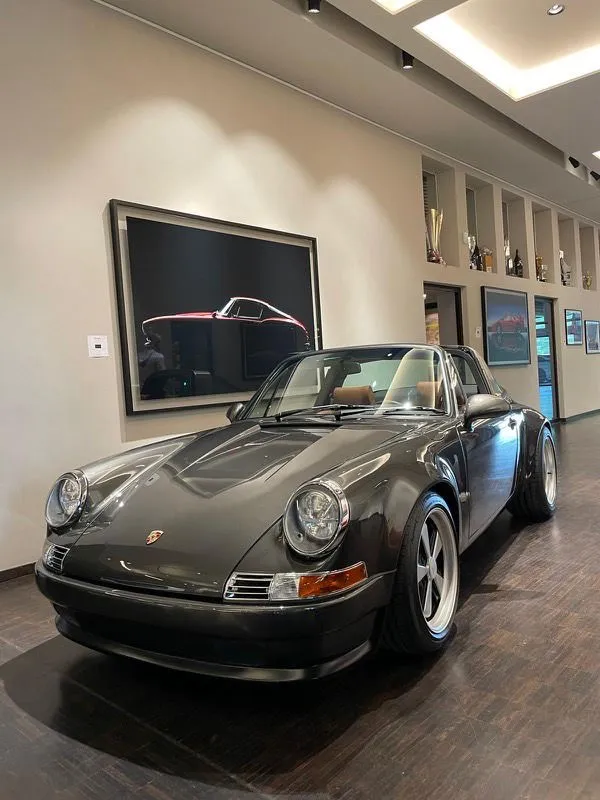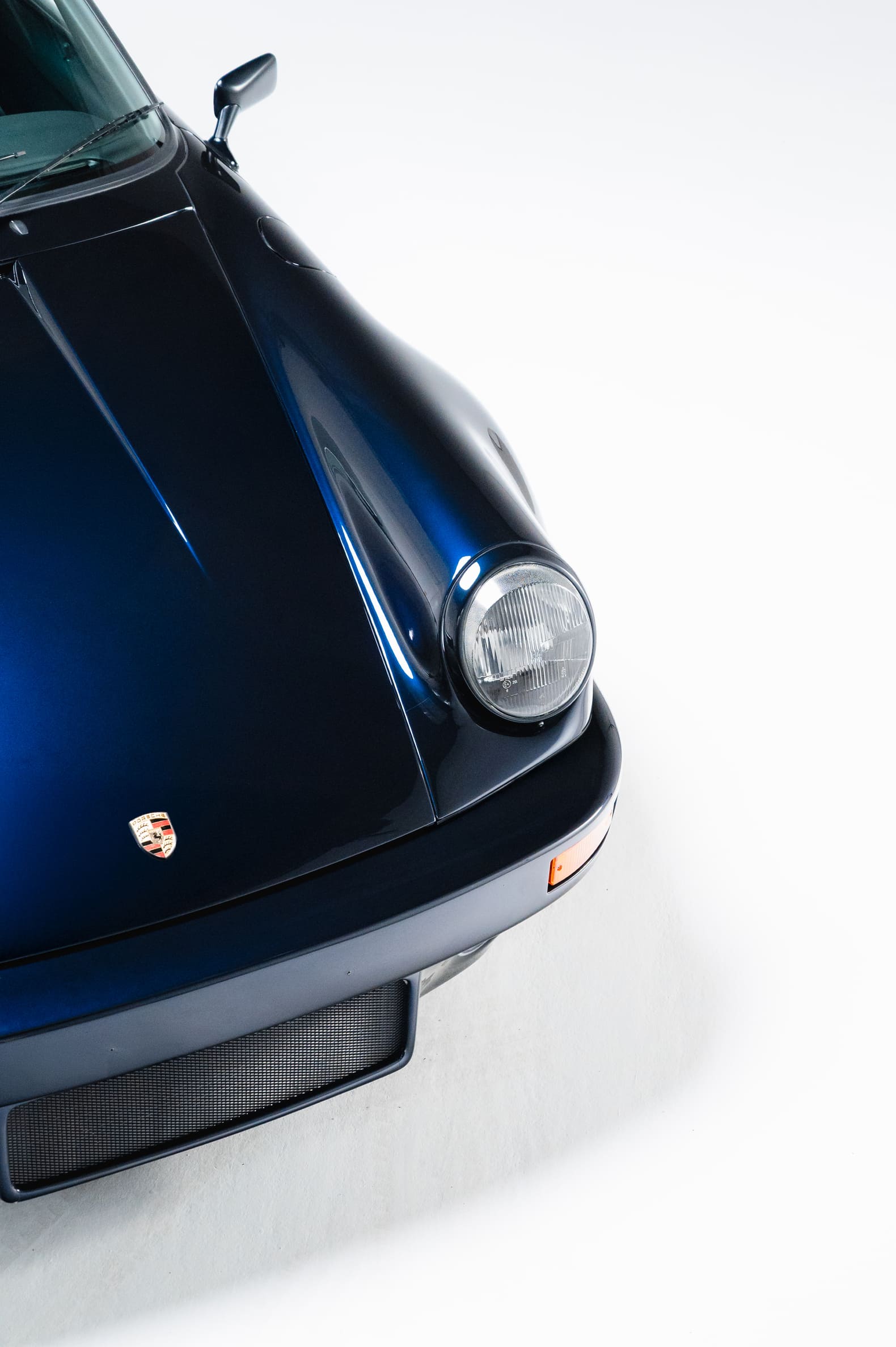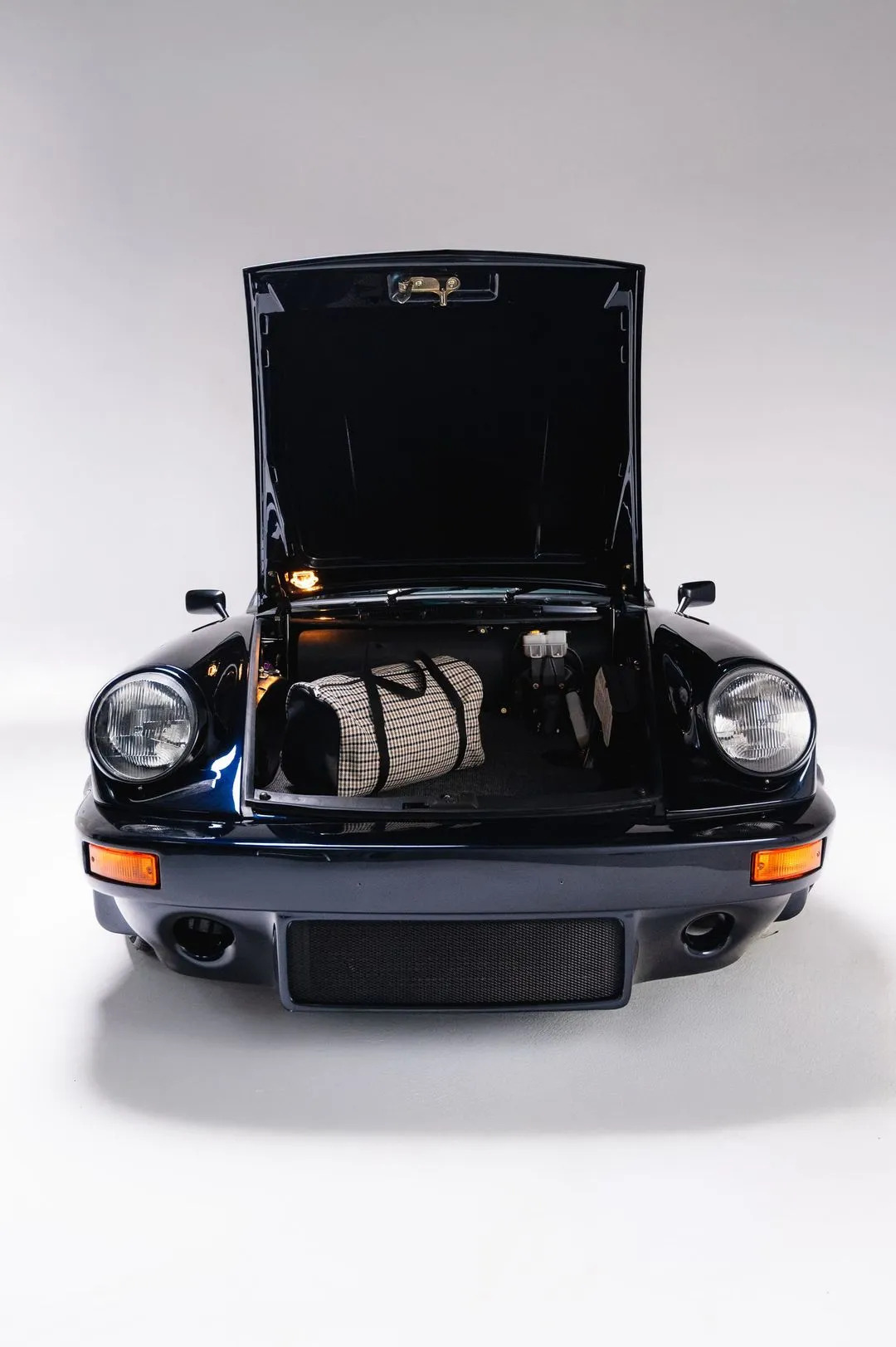

What a Porsche 911 Restomod Really Costs
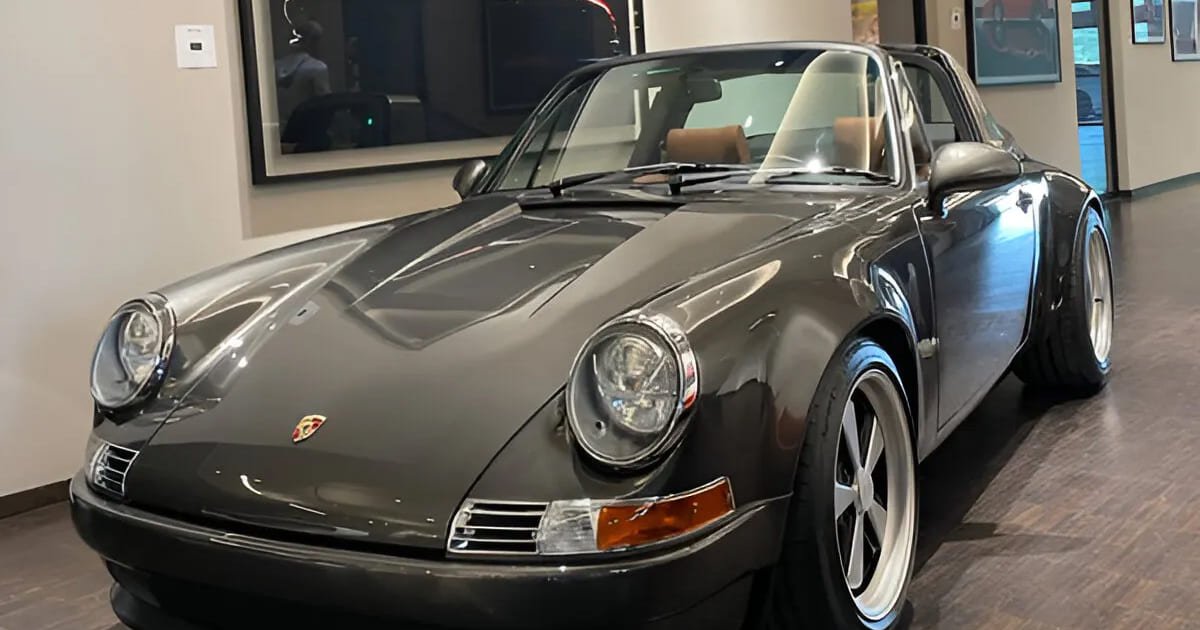
March 31, 2026
The real cost of a Porsche 911 restomod depends on three things: the builder, the depth of the specification, and the donor car. Between a mechanical refresh and a collector-grade build from one of the most coveted names, the budget differs by more than a factor of ten. At the entry end, an independent workshop Porsche 911 restoration focuses on a mechanical refresh and light cosmetics. Stepping up to an entry-level restomod or backdate with a smaller builder adds modified bodywork, upgraded engines, and some interior work, with variable documentation quality.
At every level, these projects begin with an existing, air‑cooled 911 as a donor vehicle. Builders are not competing with new car sales, but instead are reimagining and improving cherished cars that owners already have or acquire specifically for this purpose.
Premium bespoke ateliers, where we at PRINZIP R operate, sit above that entry level. We do not publish list prices: every commission is quoted individually, and you receive an itemized calculation before you sign. Above that sits the ultra-high-end collectors’ market, where the most coveted names trade on the secondary market at prices driven by scarcity and brand. In all cases, the donor air-cooled 911 is a separate line item. Its price depends on model, condition and history, and a clean 930 Turbo costs clearly more than a 964 or a G-Model Carrera 3.2.
How Much Does a Porsche 911 Restomod Cost?
A classic Porsche 911 restoration aims to return the car as closely as possible to factory specification. Think stock engine output, original body lines, familiar interior feel. A restomod or backdate respects the 911 at its core, but reimagines it with modern engineering, performance, and aesthetics tailored to the owner, always preserving the character that makes a Porsche 911 special.
You can think of four main tiers:
- Independent workshop restoration: mechanical overhaul, rust repair, paint refresh, and a mostly stock interior. Power and suspension usually stay close to original, perhaps with mild upgrades. This suits owners who want a period-correct 911 with better reliability rather than a bespoke commission.
- Entry-level restomod or backdate: visual backdate kits, a more aggressive stance, significantly upgraded suspension and engines. These builds often combine off-the-shelf parts with some custom work. Compromises can appear in documentation, project tracking, and aftersales support.
- Premium bespoke atelier: this is our territory at PRINZIP R. Cars are stripped to bare metal, engineered as complete systems, and rebuilt with a detailed specification process. The budget depends on the donor, the engine and the interior, which is why we quote each commission individually instead of publishing a price list. For suitably qualified clients, this tier is often the reference point for long-term value, provenance, and the kind of meticulous German craftsmanship that rewards close inspection and driving.
- Ultra-high-end collectors’ market: this is where the rarest names trade hands on the secondary market. Pricing reflects scarcity, branding, and collector speculation at least as much as pure build cost.
What Are the Main Cost Drivers in a 911 Build?
The same donor 964 can be the basis of a light refresh or of a bespoke build that costs many times as much. The difference lies almost entirely in scope and craftsmanship level.
Key drivers include:
- Donor car:
- 964: usually the most modern and versatile base
- G-Model Carrera 3.2: often in a similar range to a 964, with large variation based on rust and history
- 930 Turbo: clearly the most expensive of the three donors
Body style, drivetrain, and condition decide whether a car is better suited to a near-stock Porsche 911 restoration or a full restomod with heavy modifications. The starting point is always a client-owned or client-selected donor.
- Bodywork and paint, about 25 to 35 percent of build cost: bare-metal disassembly, rust treatment, panel alignment, and perfect gaps absorb huge amounts of time. All-steel bodywork, hand-formed widebody panels, and backdate details multiply the hours. Multi-stage primer, color, and clear, together with proper booths and curing, are essential for long-term protection.
- Drivetrain, about 20 to 30 percent:
- Engine builds to 3.8 to 4.0 liters, naturally aspirated power up to roughly 400 hp, turbo specifications reaching around 600 hp
- High-compression internals, aggressive camshafts, individual throttle bodies, free-flow exhausts, and modern engine management such as Ecumaster EMU Black
- Gearbox rebuilds, shorter ratios, 6-speed conversions, limited-slip differentials, and improved cooling
- Interior, 10 to 15 percent, plus suspension, brakes, wheels at 8 to 12 percent, and electrical at 5 to 10 percent:
- Interior: full leather, Alcantara headliners, bespoke seats, custom wheels, tailored carpets, audio, and integrated electric AC
- Chassis: KW V3 or DDC coilovers, upgraded bushings, careful geometry setup, high-performance brake systems, and period-correct or custom wheels
- Electrical: new wiring harnesses, modern alternators, lighting and gauge upgrades for reliability while preserving the analog character of a Porsche 911
- Project management, engineering, documentation, around 10 to 15 percent:
- Founder-led coordination in a Generalunternehmer model, managing specialist partners
- CAD work where useful, prototyping, extensive test driving, and quality control
- Detailed photographic and technical documentation that underpins provenance and resale confidence
Why Do Premium Bespoke Builds Cost so Much?
Premium prices are largely a human story. All-steel bodywork, instead of composite panels, demands countless hours of shrinking, stretching, and metal finishing each panel by hand. Achieving millimeter-precise fit on an older 911 shell is months of skilled labor, not days.
In the German context, specialist labor rates pay for more than talent. They support disciplined processes, traceability, safety-focused thinking compatible with TÜV expectations, and long-term serviceability. At PRINZIP R, a single founder-led team acts as your accountable partner, coordinating body, paint, engine, gearbox, upholstery, electrics, and logistics through staged milestones. For interested clients, we maintain a polite but attentive, concierge-style dialogue throughout the process.
We typically plan 14 to 18 months for a full build, structured around:
- Defined specification and parts reservation
- Body and chassis completion before paint
- Drivetrain, interior, and electrical installation
- Calibration, testing, and final detailing
Modern technology is another factor. Proper calibration of engine management, suspension, and brake systems for real-world roads is a specialist task in itself. Electrical modernization must improve reliability without erasing the period feel that makes an air-cooled Porsche 911 special.
Serious collectors increasingly expect complete documentation. Photographic records, spec sheets, and clear invoicing show exactly what was done and by whom. For high-end Porsche 911 restoration and restomod projects, this level of transparency often separates cars that command strong resale values from those that raise questions.
How Do the Top Builders Compare on Price?
The upper end of the 911 restomod scene is structured, even if it looks chaotic from the outside. Builders sit in distinct tiers with different philosophies and capacities.
- Leading U.S.-based restomod ateliers: build slots are often effectively closed or backed up with multi-year waitlists. Their cars tend to trade on the secondary market well above the level of most new commissions, with a significant share of that value tied to brand status.
- Gunther Werks in the USA: operates with 993-based, highly engineered series, built in very low volumes. Pricing sits at the upper end of the new-build market and climbs with options and specification.
- Theon Design in the UK: 964-based with strong use of composite materials and intensive engineering. Pricing sits broadly comparable to PRINZIP R, though with a different material and design focus that leans more toward carbon components.
- PRINZIP R in Germany: we clearly position ourselves in the premium bespoke category, focused on reimagining and refining air-cooled Porsche 911 donor cars with high-end German craftsmanship.
- Every commission is quoted individually, with an itemized calculation before you sign
- The donor car is a separate line item and is yours from day one
- Higher power, turbocharged engines and very elaborate interiors are what raise a budget most
Our typical timeline is 14 to 18 months, and we support worldwide delivery and export for suitably prepared clients.
- RUF Automobile in Germany and typical European independents: RUF occupies its own category with complete vehicles on proprietary chassis at a significantly higher price point than most restomods. Independent European workshops often work at clearly lower budgets on less structured restomods or very thorough Porsche 911 restoration projects, usually without the comprehensive project management and provenance packages of an atelier like ours.
Cost-focused FAQ for Porsche 911 Restomods
How much does a 911 restomod cost on average?
There is no meaningful average, because the range is so wide. Entry-level builds from smaller shops sit at the lower end, premium atelier-level projects such as PRINZIP R commissions above them, and the very top of the collectors’ market far beyond both. For a reliable figure, ask for an itemized quote based on your donor and your specification.
How much does a full Porsche 911 restoration cost if I stay close to stock?
A largely OEM-style Porsche 911 restoration with an independent workshop costs a fraction of a bespoke restomod. Adding more extensive upgrades, such as significant engine work or custom interiors, moves a project up quickly.
Is it cheaper to buy a finished restomod or commission one?
Secondary-market prices sometimes undercut a fresh commission and sometimes exceed it. Buying a finished car gives immediacy, but commissioning a build gives you full control over specification and complete documentation from day one, tailored around your existing or chosen donor.
Can I supply my own donor car to PRINZIP R?
In many cases, yes, as long as the donor passes inspection and suits the intended specification. The car’s condition influences budget, scope, and timelines, and we always recommend a thorough technical evaluation before committing to a build. We are happy to guide qualified clients through the selection and evaluation process.
How long does a premium 911 restomod take and how is payment structured?
A full PRINZIP R build typically takes 14 to 18 months. Payments are milestone-based, starting with a deposit to secure the slot, followed by donor acquisition, then staged payments across teardown and bodywork, paint and drivetrain, and finally assembly and delivery.
Does a high-end restomod hold its value?
Market behavior suggests that atelier-level builds with strong reputations, detailed documentation, and serious engineering attract the most stable long-term values. While no one can guarantee appreciation, collector-grade work on air-cooled 911s has shown resilience compared to undocumented or budget-conscious projects. For clients focused on long-term ownership or collection curation, careful builder selection and transparent documentation are key.
Get Started With Your Project Today
If you are ready to bring your air-cooled vision to life, our team at PRINZIP R is here to guide every step of your Porsche 911 restoration. We take the time to understand how you drive, what you value, and the character you want your 911 to have, then translate that into precise, reliable workmanship. Share your goals with us through our contact us page so we can outline a tailored path from initial concept to the final, dialed-in drive.