

Tuning Air-Cooled 911s for Alpine Passes: Suspension and Brake Concepts
.jpg)
June 22, 2026
Carving Alpine Passes with Confidence and Control
Tuning an air-cooled 911 for the Alps is about trust. You want a car that feels calm on tight hairpins, steady on broken tarmac, and ready when the road opens up along a cliffside. The right setup lets you focus on the next corner, not on what the chassis might do.
On an early summer morning, high above the tree line, a well-sorted air-cooled 911 feels completely at home. Cool air, warm pavement, patches of gravel in the shade, maybe a bit of snow still on the peaks. When the suspension and brakes match this kind of road, the car breathes with the surface and talks clearly through the steering wheel and seat.
Alpine passes ask a lot from any car. Rapid altitude changes, constant direction changes, blind bends, tight hairpins, mixed grip, and long descents all press the chassis and brakes at the same time. Our focus is to take client-owned air-cooled 911 donor cars and shape them into cars that feel ready for this environment, while keeping the character that makes a 911 special and never stepping into the world of new car sales. We work alongside Porsche, not in competition with it, concentrating exclusively on enhancing existing air-cooled 911s that our clients already own.
Understanding Alpine Dynamics for Air-Cooled 911 Drivers
The rear-engine layout gives the air-cooled 911 a very distinct feel in the mountains. There is strong traction on climbs, because the weight sits on the driven wheels. On the other hand, you have less weight on the front axle, which means turn-in and stability under brakes need special attention, especially when the road is steep or off-camber.
On the way up, you lean on traction and balance. On the way down, you lean on brakes and confidence. Alpine passes mix:
- Steep downhill sections with no real cooling break
- Off-camber corners that can push the car wide
- Patchy grip when snowmelt crosses the road
- Slow hairpins that demand strong front bite, then traction on exit
Brakes work harder in the Alps than in almost any other kind of road driving. Long descents with repeated medium and heavy braking can push rotor and pad temperatures high. If the system is not matched to this use, the pedal can grow long, the pads can glaze, and the driver starts to back off, not because of speed, but because the car no longer feels clear and honest.
For us, safety and predictability sit above lap times or hard numbers. A summer pass drive usually means sharing the road with cyclists, hikers, buses, and sudden clouds or thunderstorms. A well-tuned air-cooled 911 should give its driver reserves, not surprises.
Suspension Philosophies for Mountain Roads
There are two main directions owners of air-cooled 911 cars often consider for Alpine use. One is a more period-correct, analog feel, where the car keeps a bit of roll, a bit of movement, and that classic sense of mechanical connection. The other is a modern restomod approach, with more precision and control, without turning the car into something cold or sterile.
We think of it as a spectrum, not an either-or choice. Our starting point is always the donor car in front of us. We look at:
- Current suspension hardware and condition
- Body structure and any past changes
- Planned use: mountain touring, long trips, occasional track days
- The owner’s personal taste in steering weight and ride comfort
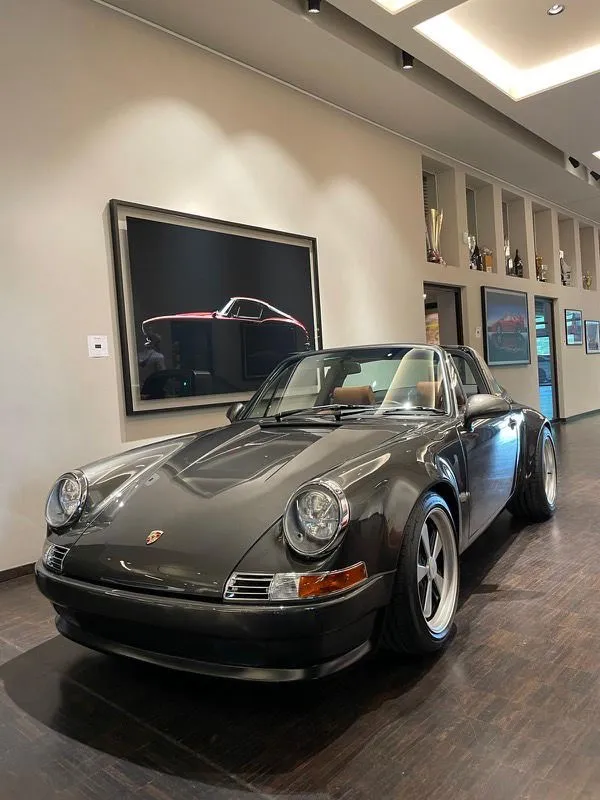
From there we define a suspension concept, not just a list of parts. Sometimes a more classic setup with smart geometry and damper tuning is right. Sometimes a more modern, adjustable system makes sense. We pay close attention to the work of well-known high-end restomod players in this field, including Singer, the most widely recognized name in this space, and treat them as important benchmarks, without disparagement. At the same time, we keep our own high-end German engineering and craftsmanship approach, shaped by our roads, our test routes, and our respect for each specific air-cooled 911.
Building the Ideal Alpine Suspension Package
For Alpine passes, we aim for composure, not race-car stiffness. The springs and dampers need enough rate and support to keep the car flat and connected, yet still allow the tires to follow rough patches and broken edges.
Spring and damper choices focus on three key situations:
- Tight hairpins where weight transfer is large and slow
- Mid-speed sweepers where stability equals confidence
- Mixed surfaces with patches, seams, and repairs
Geometry work then gives the car its voice. Ride height affects weight transfer and bump travel, but also how calm the car feels at speed. Corner balancing helps the 911 feel even from left to right, very important when you hit hairpins in both directions. Alignment decides how the car turns in, how it behaves under trail braking, and how it puts power down on exit.
Smaller details make a big difference. Bushing choices can move the feel from soft and classic to sharper and more direct, without making the car harsh. Sway bar tuning adjusts how much the car rolls and how the front and rear share the work. Discreet chassis reinforcement at known stress points helps the shell feel tight and precise, which in turn makes damper changes easier to feel from the driver’s seat on a long summer day.
Throughout this process, we apply the kind of precise, meticulous German craftsmanship that our clients expect: clean execution, repeatable results, and an emphasis on long-term quality.
Brake Concepts for Long, Technical Descents
Brakes on Alpine passes do not just need to stop the car once. They need to deliver a consistent, solid pedal through hour after hour of on-off use with limited airflow and few real cooldowns. This is where a normal fast-road setup can start to struggle.
We look at the entire brake system as one unit. Depending on the donor car and its wheel size, this might include:
- Larger rotors, within reason, for more thermal capacity
- Calipers that give firm feel without being too aggressive
- Brake pad compounds suited to repeated medium-high energy stops
- High-temperature brake fluid and correct bleed process
Weight plays a clear role. A lighter car with thoughtful interior and component choices needs less raw brake hardware than a heavier build on wide, modern tires. Tire choice itself sets the available grip level, which should match brake bite and suspension support. Our goal is that the driver always feels a strong, steady pedal, with no surprises as the descent continues and the views keep changing.
Integrating Modern Tech Without Losing Soul
Modern parts can work well on an air-cooled 911, as long as they respect the car’s nature. Adjustable dampers, for example, can allow one setting for relaxed touring and another for a more focused pass run, while still giving a clear, communicative ride. Brake cooling solutions, like carefully shaped air guides or ducts, can support thermal control without shouting for attention.
Where available and appropriate, refined ABS strategies can help in wet conditions or over harsh patches, but we are careful not to filter out the feedback that makes these cars so special. Many owners of air-cooled 911 cars want the car to feel alive in their hands, not isolated.
The visual side matters too. High-quality components should sit quietly in the background, both in the wheel wells and in the cabin. Clean installation, tidy lines, and finishes that sit well next to classic Porsche design help the whole car feel like one complete idea rather than a collection of parts.
Preparing Your Air-Cooled 911 for Summer in the Alps
Before your next summer pass trip, it makes sense to treat the car as a partner you are asking a lot from. Even with a strong base setup, a simple pre-season check can protect both enjoyment and safety. We like to see:
- Alignment and corner balance checked and recorded
- Brake system inspected, pads and rotors measured, fluid refreshed
- Tire condition, age, and pressures reviewed under real load
- All suspension joints, bushings, and mounts checked for play
For owners who want to shape their air-cooled 911 around Alpine driving, a focused discussion on roads, style, and expectations is the right first step. From there, we can think together about an individual suspension and brake concept that fits the passes you love most, the way you like to drive, and the unique character of your own donor 911. Our role is to bring high-end German craftsmanship and engineering discipline to your existing Porsche 911, enhancing what you already own rather than replacing it.
Bring Your Air-Cooled Vision To Life With Precision Backdating
If you are ready to turn your classic Porsche dream into a finely executed build, we are here to guide every step. Explore our Air-cooled 911 backdate options to see how we combine period-correct character with modern craftsmanship. At PRINZIP R, we collaborate closely with you so every detail reflects your taste and driving style. Have specific questions or a project in mind already, just contact us and we will discuss what is possible.
Handcrafted builds - specified to your personal preferences
%20(1)%20(1).avif)
.avif)






.jpeg)




.jpeg)
.avif)